


Best anagram games for vocabulary building
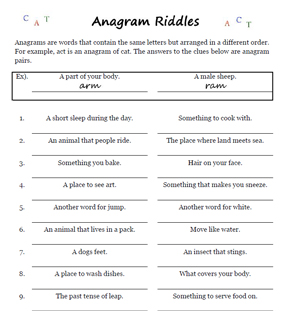
Anagram games are word-based games where players rearrange letters to form new words. This article reviews some of the best anagram-style games for vocabulary building, focusing on how they work, what makes them effective, and who they are best suited for. It is written for students, casual players, educators, and anyone interested in improving their language skills through structured, engaging play.
What makes an anagram game effective for learning
An effective anagram game encourages players to experiment with letter combinations while reinforcing correct spelling and word recognition. The best games balance challenge and accessibility, offering clear rules, immediate feedback, and a steady progression in difficulty.
From a learning perspective, anagram games help players internalize word patterns, prefixes, suffixes, and common letter groupings. Unlike passive learning methods, they require active recall and problem-solving, which supports long-term vocabulary retention.
Classic anagram-based word games
Scrabble
Scrabble remains one of the most widely known word games built around letter rearrangement. Players use a set of random letters to form words on a board, earning points based on letter values and placement.
Strengths include exposure to a wide vocabulary range and encouragement of strategic thinking. Players often discover unfamiliar words through gameplay and dictionary checks. A limitation is that beginners may feel overwhelmed when playing against experienced opponents, which can slow down learning if not moderated.
Scrabble is well suited for intermediate to advanced learners and for group play where discussion around word choices can enhance learning.
Boggle
Boggle focuses on speed and pattern recognition. Players search for as many words as possible within a grid of letters during a limited time. Words must be formed from adjacent letters, which introduces spatial reasoning alongside vocabulary use.
This format encourages rapid recall and reinforces recognition of common letter combinations. However, the emphasis on speed may reduce reflection, making it less suitable for learners who prefer a slower pace.
Boggle works well for reinforcing existing vocabulary and for players who enjoy fast, competitive sessions.
Digital anagram games and apps
WordBrain
WordBrain presents players with a grid of letters that must be connected in the correct order to form hidden words. The difficulty increases gradually, introducing longer words and more complex layouts.
Its main strength lies in structured progression. Players build confidence as they advance through levels, encountering increasingly challenging vocabulary. The game’s limitation is that hints, while helpful, may reduce learning if overused.
WordBrain is well suited for solo players who want a calm, focused experience with steady vocabulary development.
Text Twist
Text Twist challenges players to form as many words as possible from a fixed set of letters, usually under time pressure. The objective often includes finding at least one longer word to progress.
This format closely mirrors traditional anagram exercises used in classrooms. It promotes deep exploration of letter combinations and encourages players to think beyond obvious solutions. Time limits can be stressful for some players, which may limit its appeal.
Text Twist is ideal for learners who want to actively expand their vocabulary and enjoy analytical challenges.
Educational value compared to other word games
Anagram games differ from crossword puzzles or word searches in that they require word construction rather than recognition alone. This makes them particularly effective for vocabulary growth, as players must actively generate words instead of selecting them from clues.
Compared to trivia-based word games, anagram games focus less on factual knowledge and more on linguistic structure. This makes them accessible across age groups and educational backgrounds.
Strengths and limitations of anagram games
One major strength of anagram games is their adaptability. They can be played casually or competitively, alone or in groups, and across different platforms. They also support incremental learning, as players naturally progress toward more complex words.
A limitation is that some games prioritize scoring or speed over learning. Without reflection or feedback, players may repeat familiar words instead of expanding their vocabulary. Games that include word definitions or review features tend to offer stronger educational benefits.
Who benefits most from anagram games
Anagram games are particularly useful for language learners, students developing spelling skills, and adults looking to maintain cognitive flexibility. Educators often use them as supplementary tools to reinforce classroom learning.
They are less suited for players who prefer narrative-driven games or those who find abstract word manipulation unengaging. Choosing the right game depends largely on learning goals and personal preferences.
A flexible tool for lifelong word learning
Anagram games occupy a unique space between entertainment and education. Whether played on a board, on paper, or through a mobile app, they offer a practical way to explore language patterns and expand vocabulary over time. Their enduring appeal lies in their simplicity: a small set of letters can always produce a new challenge, and often, a new word worth remembering.
