
Word games have long served as quiet laboratories for problem-solving, pattern recognition, and strategic thinking. This review explores the classic word games that laid the groundwork for many ideas now used in modern AI-driven games. It is written for curious readers, educators, designers, and anyone interested in how traditional gameplay concepts translate into artificial intelligence systems.



Why word games matter to AI design
Long before artificial intelligence entered mainstream gaming, word games were already testing skills that AI systems now try to replicate or support. These games rely on vocabulary knowledge, logical constraints, probability, and adaptive decision-making. Modern AI games often automate, analyze, or enhance these same mechanics, using algorithms where humans once relied purely on intuition and experience.
By examining classic word games, it becomes easier to understand why they remain relevant reference points for AI developers and researchers.
Scrabble and combinatorial reasoning
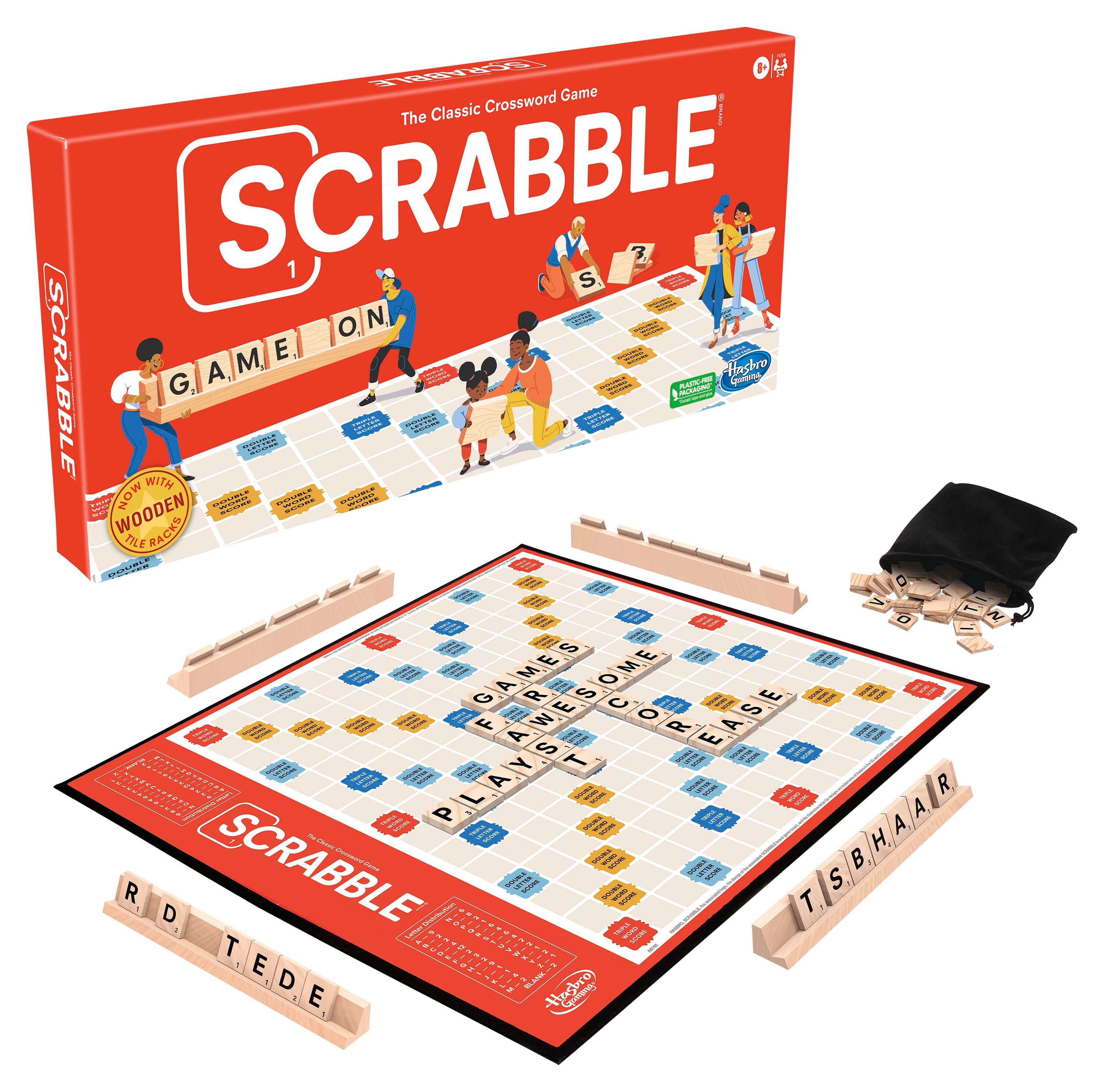
Scrabble challenges players to form words on a grid while maximizing points based on letter values and board bonuses. Behind its simple rules lies a complex combinatorial problem. Each move affects future possibilities, forcing players to balance immediate rewards with long-term positioning.
This structure strongly influenced AI approaches to search and optimization. Early Scrabble programs demonstrated how algorithms could evaluate thousands of possible moves, estimate future outcomes, and select optimal strategies. The game’s limitations are clear: it favors strong vocabulary knowledge and can feel intimidating to casual players. Still, its influence on AI decision-making models remains significant.
Scrabble-inspired logic is best suited for AI systems that focus on optimization, scoring, and strategic foresight.
Crossword puzzles and constraint solving
Crossword puzzles are built entirely around constraints. Words must fit defined spaces, intersect correctly, and match clues with varying degrees of ambiguity. For humans, this requires lateral thinking and linguistic intuition. For AI, it represents a classic constraint satisfaction problem.
Modern AI crossword generators and solvers rely on databases, semantic matching, and probabilistic reasoning. The strength of crosswords lies in their structured complexity, which makes them ideal for testing language understanding. Their limitation is rigidity: creativity is bounded by strict grids and rules.
Crossword logic is especially useful for AI systems focused on structured language tasks, such as natural language processing and automated content generation.
Boggle and pattern recognition
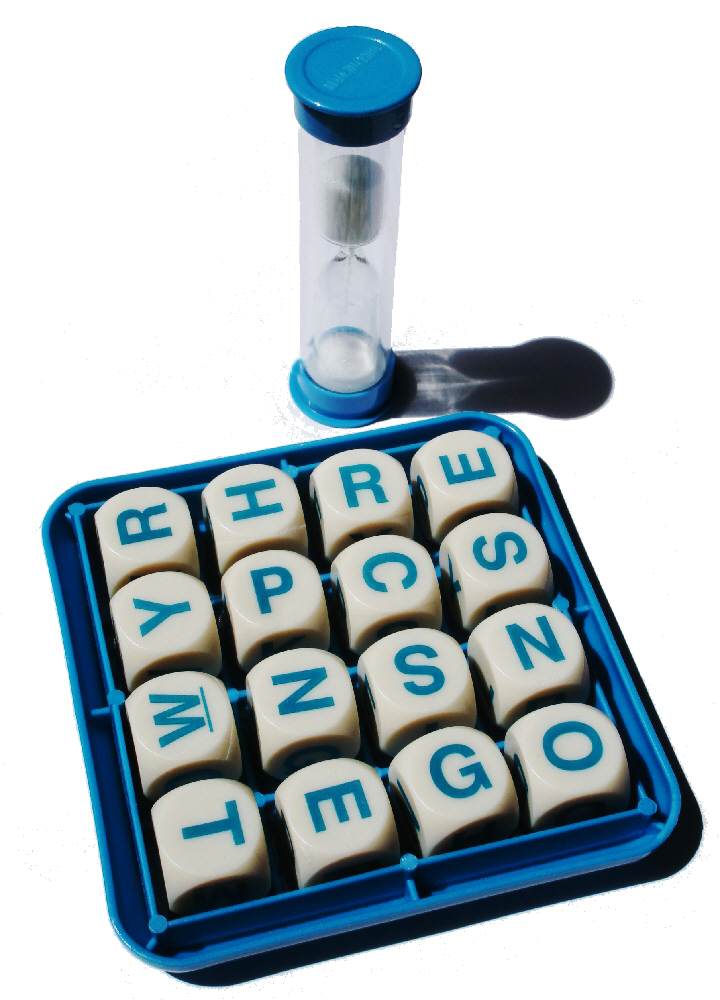
Boggle asks players to find as many words as possible within a grid of randomly arranged letters, following adjacency rules. Unlike Scrabble or crosswords, speed and visual pattern recognition play a central role.
This mechanic influenced AI techniques related to pathfinding and dictionary search. Algorithms must rapidly scan letter combinations while respecting movement constraints. While Boggle excels at encouraging spontaneous discovery, it can feel repetitive over time due to its limited strategic depth.
Boggle-style mechanics are well suited for AI systems designed to test rapid recognition, search efficiency, and real-time feedback.
Hangman and probabilistic guessing
Hangman is deceptively simple. Players guess letters to reveal a hidden word, with limited chances for error. From an AI perspective, the game revolves around probability, frequency analysis, and adaptive guessing strategies.
AI solvers often prioritize common letters, adjust choices based on revealed patterns, and narrow down possible words dynamically. The game’s main limitation is depth: once optimal strategies are known, challenge decreases. Still, Hangman provides a clear illustration of how uncertainty and partial information can be managed algorithmically.
This makes it useful for introductory AI models and educational demonstrations of probabilistic reasoning.
Wordle and feedback-driven learning
Wordle introduced a feedback loop that feels simple yet powerful. Each guess provides color-coded information indicating correctness and position. This mirrors the way many AI systems learn through feedback signals.
AI solvers for Wordle evaluate guess efficiency, information gain, and likelihood reduction. The game’s strength lies in its clarity and fairness. Its limitation is narrow scope, as each puzzle follows the same structure.
Wordle-style mechanics strongly align with reinforcement learning concepts, making them appealing models for modern AI puzzle design.
Shared design principles that shaped AI games
Across these games, several recurring ideas emerge. Clear rules create defined problem spaces. Limited resources or attempts force strategic thinking. Feedback guides future decisions. These principles now underpin many AI-powered games, from adaptive difficulty systems to personalized hints and dynamic content generation.
What differentiates modern AI games is automation and scale. AI can analyze vast word lists, simulate countless outcomes, and tailor experiences to individual players, all while relying on the same foundational concepts pioneered by classic word games.
Where classic inspiration meets modern limitations
While these word games inspired AI development, they also highlight constraints. Vocabulary-based games can reflect language bias. Fixed rules can limit creativity. AI systems built on these models must carefully balance structure with flexibility.
Understanding the origins of these mechanics helps developers design AI games that remain engaging, fair, and accessible.
A living legacy of letters and logic
Rather than fading into nostalgia, classic word games continue to shape how intelligence is modeled in games. Their rules, challenges, and limitations offer a blueprint that modern AI systems still follow, proving that even the simplest letter-based puzzles can leave a lasting mark on intelligent game design.
